Intermodal & Rail Freight

One coordinated booking across road, rail and ferry, with a lower-carbon main haul where the lane allows.

Service capabilities

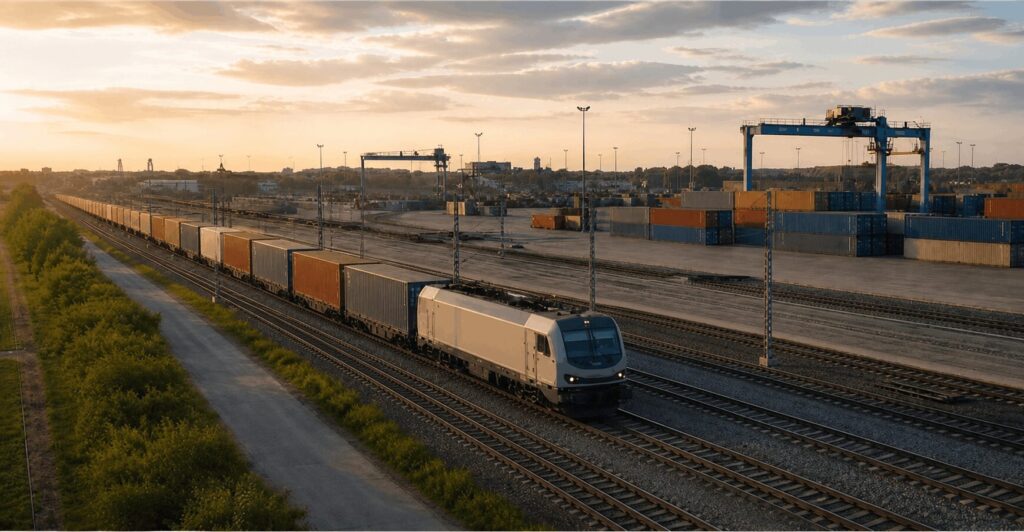
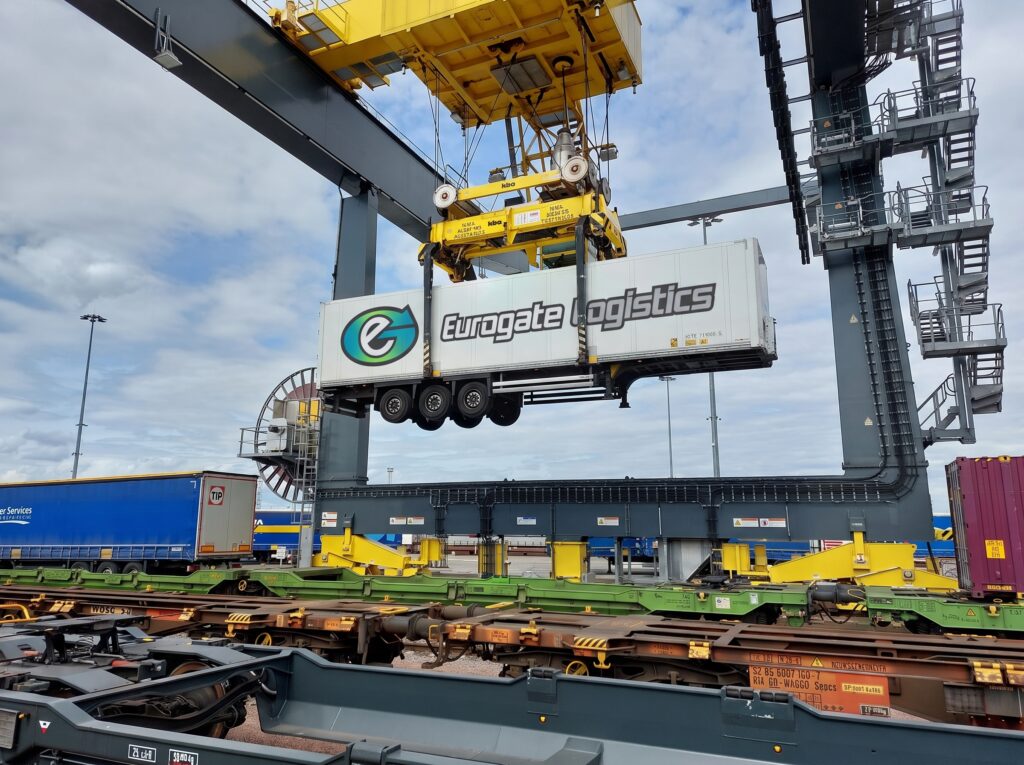
Eurogate combines road, rail and ferry where appropriate into one managed movement: we book rail or ferry space, arrange road pre-carriage to the terminal, the main haul, and on-carriage to your door. The same team holds documents and status throughout, and sends transit updates and proof of delivery back to you. The legs have to join up cleanly, so our planning focuses on building the most efficient multimodal solution for each route.

What this service supports

Suitable for...

Shippers cutting the carbon of regular long-haul freight across Europe.

Shipment profile

Full trailers and containers on combined road, rail and ferry legs.

Operational focus

One coordinated movement on lower-carbon rail and ferry legs.

Typical use case

Long-haul corridors where emissions or road capacity are the pressure.

Experience across sectors and consignment types

Eurogate has experience supporting customers across a wide range of sectors, from food and packaging through to packed chemicals, construction equipment and specialist consignments outside standard pallet formats. The Group also has a strong track record supporting sectors such as oil and gas, engineering, steel fabrication and energy.

Automotive
FMCG
Manufacturing
Consumer goods
Palletised freight
Long-haul corridors
UK to Continent
Lower-carbon flows

How Eurogate delivers this service

Eurogate’s services are delivered through experienced teams who manage lanes across their regions, coordinate between markets where required, and support customers from collection to delivery. That includes customs management, local market guidance, and direct communication throughout the movement.

Mode chosen for the lane

We weigh rail, ferry and road on your corridor against transit and cost, then put together the combination that suits the shipment.

Cover when the road is short

When driver shortages or peak weeks pull capacity off the road, a rail or ferry main-haul keeps the freight moving on schedule.

Legs that join up

Terminal pickup, main haul on rail or ferry, then carriage to the consignee. We hold the slots and documents so the handovers run on time.

One team, every leg

The office that books the movement coordinates each mode and picks up when you call, so the same people hold the booking from terminal to consignee.

Key service features

The structure depends on the route, the consignment and the level of support required. Features may include the following.

Road, rail and ferry combined
UK rail-to-ferry departures
Short-sea container crossings
40ft pallet-wide super-cube containers
Transit updates and proof of delivery
Lower-carbon main-haul option

Consumer goods & FMCG

FMCG and ambient consumer goods on UK rail-to-ferry and short-sea routes, with high-capacity pallet-wide containers where the lane and volumes suit them.

What sets our service apart

Speed matters in logistics. We’ve built our operation around getting your cargo where it needs to go without delay, backed by terminals positioned across eight nations and staffed by people who know the work.

The lane decides the mode

We recommend the road, rail or ferry mix the corridor actually supports.

A lower-carbon option

On longer hauls, a rail or ferry main-haul cuts the carbon of the move.

Same discipline, every mode

The documents and status checks that run our road desks carry straight across the rail and ferry legs.

FAQs

What is rail and intermodal freight?

Intermodal freight moves your cargo on more than one mode, typically a short road leg to a terminal, a longer rail or short-sea leg for the main haul, then a road leg to the consignee. Rail freight is the rail portion of that journey. The cargo stays in the same trailer or container throughout, so it is not handled or reloaded between modes.

Which rail and intermodal corridors does Eurogate use?

We combine road, rail, and short-sea across Europe and beyond, including UK-originating freight that moves by rail to regular ferry services into the Continent, continental rail for long-haul flows, and short-sea container crossings. We plan each corridor on its merits and route it through the terminals and connections that suit the lane. Tell us the origin and destination and we will confirm whether an intermodal corridor fits.

How does intermodal compare to road on cost and emissions?

On the right long-haul lanes, rail and short-sea cut CO2 against an all-road move and can hold their cost when driver shortages, permit cycles, or peak weeks tighten road capacity. The saving depends on the corridor, the distance, and the terminals available, so it is strongest on longer flows. We compare the modes on your lane and recommend the combination that genuinely serves the shipment.

Is intermodal slower than road freight?

It can be, because the cargo moves through terminals and runs to fixed rail or ferry schedules rather than driving straight through. On longer corridors that difference narrows, and the trade-off often makes sense for capacity or emissions reasons. Where the transit time or cost does not work for a lane, we will say so and keep the freight on the road.

Which commodities suit intermodal transport?

Automotive components, FMCG and consumer goods, industrial machinery, and building materials all move well on combined road-rail and short-sea, particularly on longer corridors and for freight where lower emissions are a priority. Full trailers and containers are both suitable, including 40ft pallet-wide super cubes that carry more pallets per trip than a standard trailer. Time-critical or very short-haul freight is usually better kept on the road.

Is intermodal transport typically door-to-door?

Yes. A typical job runs as pre-carriage by road to the terminal, the main haul on rail or short-sea, then on-carriage by road to the consignee, booked as one door-to-door move. One Eurogate operator runs the schedule check, the trailer, the document pack, the terminal slot, and every leg, so you have one point of contact rather than one per mode.

Case Studies

Moving Scottish Natural Stone by Road

Engagement

High-weight, high-value transport

Corridor

Inbound to the EU

A Restricted Delivery in Central Madrid

Engagement

One-off restricted-access delivery

Corridor

Inbound to central Madrid, Spain

Ready to move your cargo

Talk to our team about your shipping needs and get a quote today. Operations in eight countries with connections to move goods anywhere in Europe.

Ready to move your cargo

Talk to our team about your shipping needs and get a quote today.

Operations in eight countries with connections to move goods anywhere in Europe.